A water loss is a race against the building materials. Drywall wicks water upward within hours, subfloors swell, and mold can begin colonizing wet materials in one to two days. The job of a restoration crew is to win that race and leave behind documentation good enough that your insurer pays for the work.
What the crew does when they arrive
Source control first. If water is still coming in, that stops before anything else: a supply-line shutoff, the main, a tarp on a roof, or a call to the utility. The crew photographs the scene as they found it, because those first photos carry a claim.
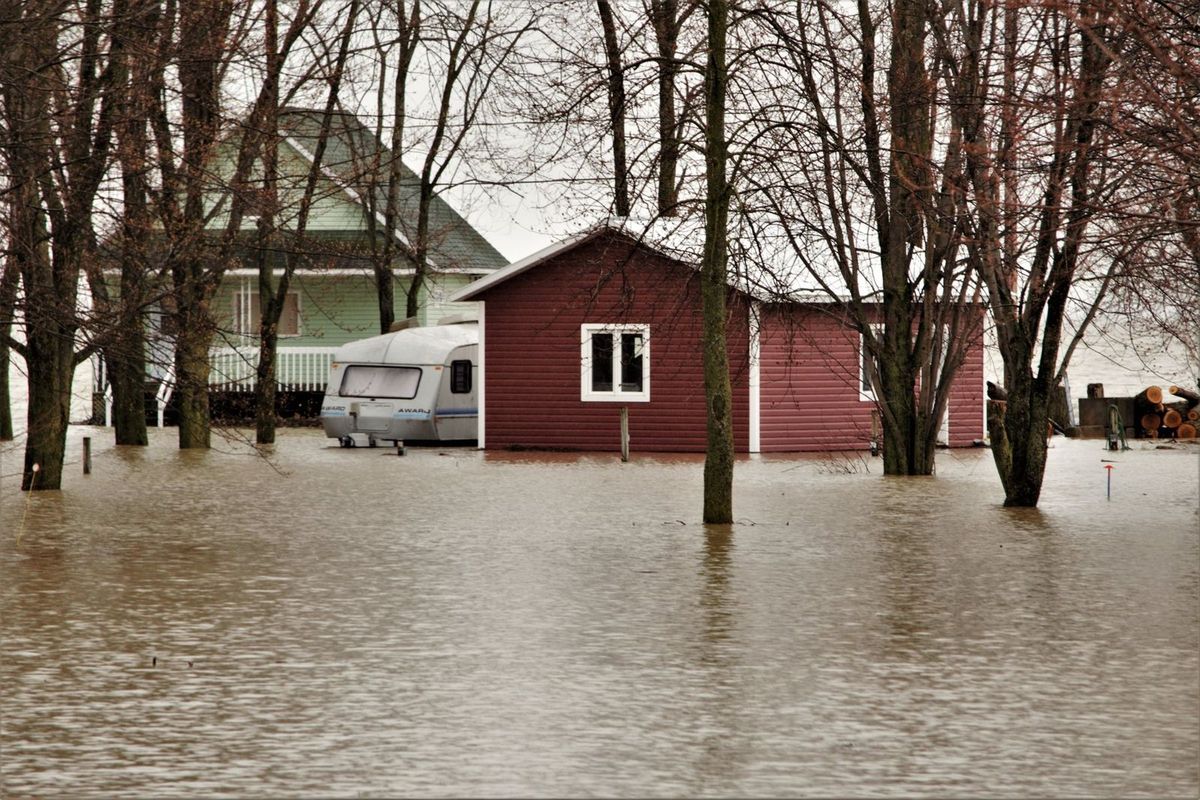
Classify the water. Restoration follows the IICRC S500 standard, which sorts water into three categories. Category 1 is clean supply water from a pipe or appliance. Category 2 is grey water, such as washing machine discharge or water that has sat long enough to pick up contaminants. Category 3 is black water: sewage, river or groundwater flooding, or anything that has been standing for days. The category decides what can be dried and what has to be removed, and how the crew protects itself and your household.
Map the migration. Water travels under flooring, behind baseboards and down through framing to the floor below. Pin and pinless moisture meters, plus an infrared camera, show where it actually went, which is almost always farther than it looks. That map becomes the drying plan and the scope of the estimate.
Extract. Standing water is pumped or vacuum-extracted. Carpet and pad are extracted with weighted tools that squeeze water out rather than just skimming the surface.
Remove what cannot be dried. Saturated drywall, insulation, carpet pad, laminate flooring and particle-board cabinets rarely dry in place. The crew removes them cleanly, bags them, and documents quantities in the format the estimate uses: square feet of drywall, linear feet of baseboard, square feet of flooring.
Dry and monitor. Air movers push evaporation; low-grain refrigerant dehumidifiers pull that moisture out of the air. Equipment is sized to the room using the same formulas adjusters check. Readings are taken daily and compared against the dry standard for each material. When the numbers are met, the equipment leaves; not before, not long after.
Why documentation is the service
Two homes can have identical damage and very different claim outcomes. The difference is almost always the file: timestamped photos from before anything was moved, moisture readings in a log, equipment counts per day, and an estimate written in Xactimate, the line-item pricing system used by nearly every major carrier. A contractor who works in that format speaks the adjuster's language, and covered work gets approved instead of disputed.
Water damage in Puget Sound homes
Our housing stock creates predictable failure points. Crawl spaces under most single-family homes collect water from poor grading and failed sump pumps in the November-to-February atmospheric-river season. Mid-century homes in Seattle, Bellevue and Tacoma still have original galvanized or early copper supply lines that pinhole. Condo and townhouse stacks share walls, so a failed washing-machine hose on the third floor becomes three insurance claims. Basements on the hillside neighborhoods of Seattle and the glacial till of the Eastside get groundwater pressure that no amount of interior sealing stops. Crews here see all of it every week, and the drying plan reflects the building, not a template.
When to call
Call as soon as you find water you cannot stop or dry with towels in an hour. A supply line that drips overnight, a dishwasher that failed while you were at work, or a basement with an inch of water all qualify. The earlier a crew starts, the more can be saved, the shorter the drying time, and the smaller the claim.