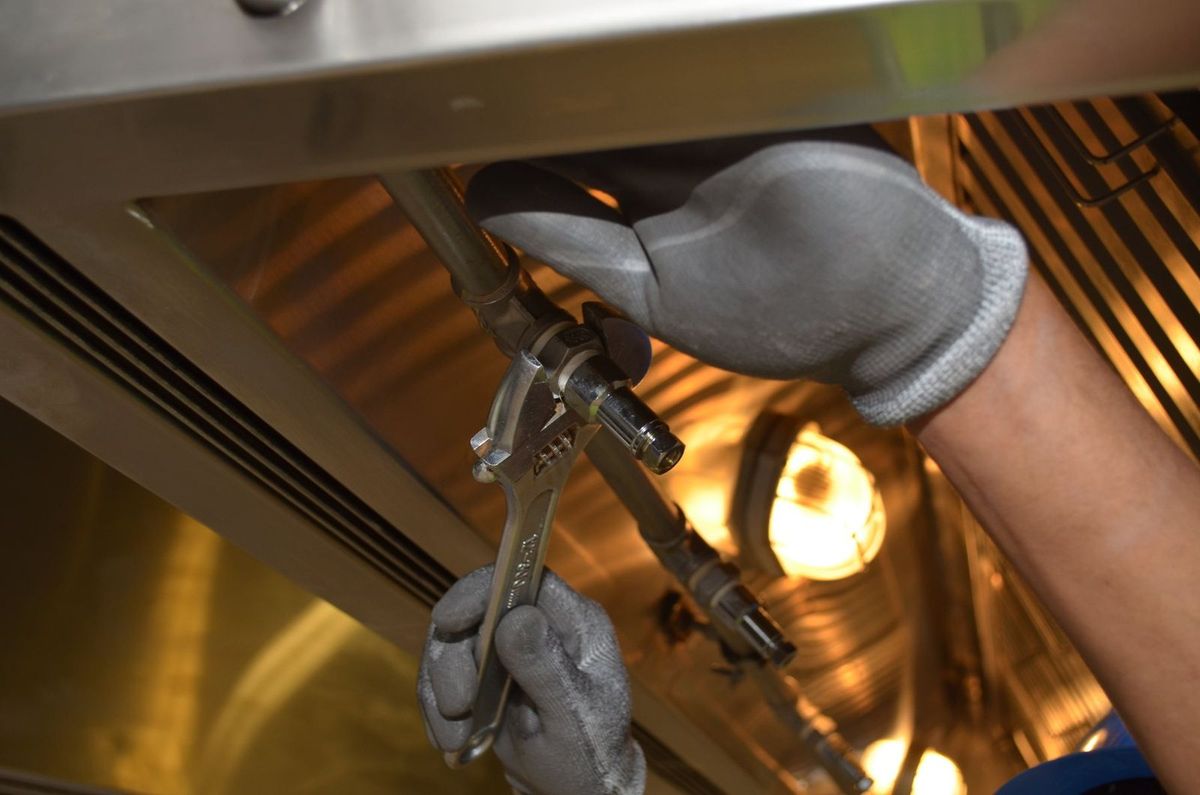
Appliance leaks fall into two kinds. The sudden ones, a burst washing-machine hose or a water heater tank that splits, dump water fast and are hard to miss. The slow ones, a dishwasher door gasket, a refrigerator ice-maker line, a water heater weeping at a fitting, run for weeks under flooring and inside cabinets before anyone notices. Both are among the most common homeowners claims, and both are far cheaper when drying starts early.
Where the water goes
Kitchens and laundry rooms are built to look clean, not to show leaks. Water from a dishwasher runs under the unit, beneath the flooring and into the cabinet toe-kicks on either side. A refrigerator line failure soaks the subfloor behind the unit for months. A water heater in a garage or closet runs along the slab and under the adjacent wall. A washing machine on an upper floor sends water through the subfloor to the ceiling below in minutes.
The crew's first job after shutting off the source is to find all of it with moisture meters and thermal imaging, including the places you cannot see. Toe-kicks are removed, the cabinet base is metered, the floor is mapped, and the room below is checked.
Saving floors and cabinets
Early intervention changes the outcome. A hardwood floor wet for a day can often be dried with a mat system that pulls moisture up through the boards; the same floor after a week is cupped and needs replacement. Plywood cabinet boxes can be dried through the toe-kick space; particle-board boxes swell and usually cannot. Tile over a cement board base can almost always be dried in place; tile over wet plywood sometimes needs to come up.
The crew tells you what is likely to be saved before they start, and the drying plan is written to protect the expensive things first.
Water heaters specifically
A standard tank water heater lasts roughly eight to twelve years in this region, and the end usually comes as a slow weep at the bottom seam that becomes a steady leak. A full tank is 40 to 50 gallons, and the supply keeps feeding it until the inlet valve is closed. If yours is in a closet or utility room inside the house, consider a drain pan with a drain line and a leak alarm; they cost little and turn a flood into a puddle.
For the claim, the tank itself is a maintenance item and typically your cost. The sudden damage it caused is usually covered, and the restoration contractor bills the insurer directly for that work.
The documentation that protects your claim
Appliance claims often turn on one question: was this sudden or long-term? Photos of the failed part, the water pattern and moisture readings on day one are the evidence. The crew photographs the failed component, notes the likely cause and timeline, and writes the estimate in Xactimate so the adjuster can match scope to pricing. Keep the failed hose or part; do not throw it away until the claim is settled.