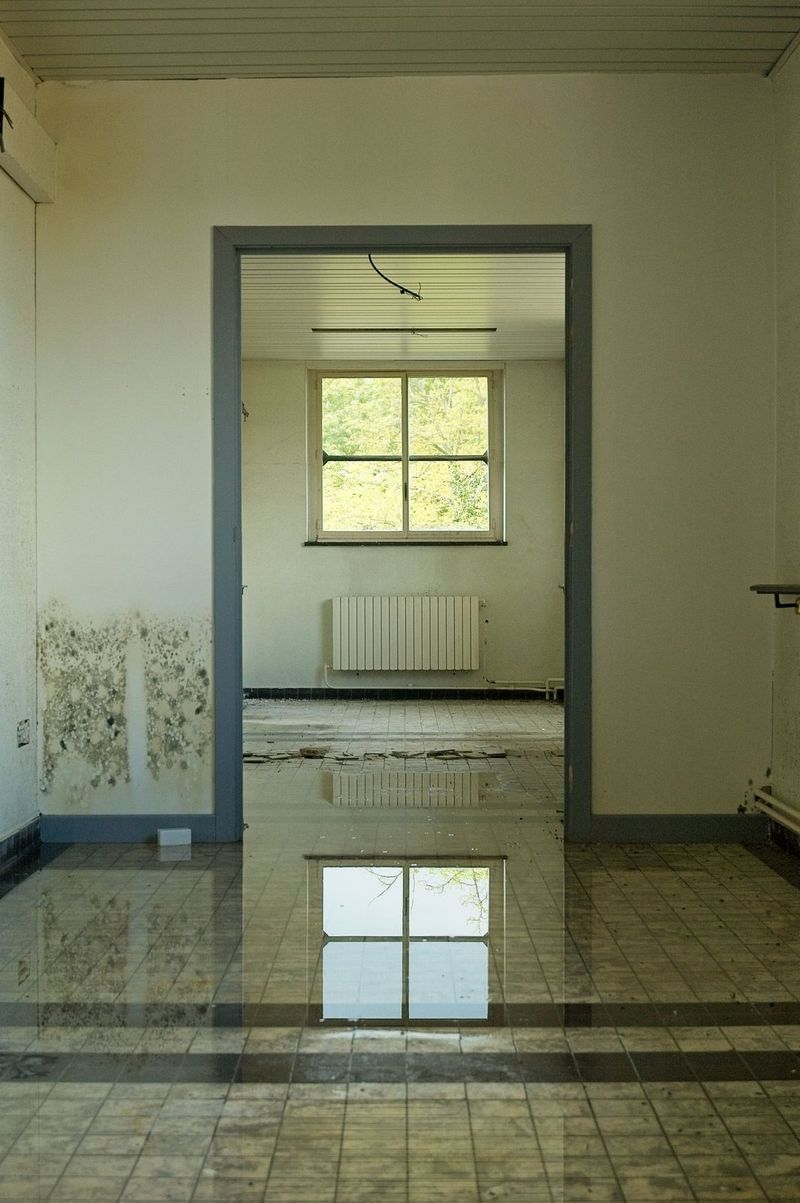
Most Puget Sound homes sit on a crawl space or a daylight basement, and both collect water for the same reasons: this region gets most of its roughly three feet of annual rain between October and March, much of it in multi-day atmospheric-river events that saturate the soil and overwhelm drainage. When a sump pump fails, a downspout dumps against the foundation, or a water heater in the basement lets go, the lowest part of the house fills first.
Two very different problems
Plumbing water is a supply line, water heater, washing machine, dishwasher or a toilet supply that failed. It is clean at first, it is sudden, and it is usually a covered insurance loss. Crews extract it, dry the structure and bill the insurer directly on covered claims.
Water from outside is groundwater through the slab or foundation walls, surface water through a window well or door, or a sump pump that could not keep up. It is treated as Category 2 or 3 water because of what it carries, and standard homeowners policies usually exclude it unless you carry a water backup endorsement or flood insurance. We still handle it, and we tell you before work begins that this is likely to be an out-of-pocket job so you can decide with full information.
The source is not always obvious from the water line on the wall. Crews check the water heater, the washing machine supply, the sump pit, the pressure of the municipal supply and the grading outside before writing the cause into the file, because that line decides your claim.
The crawl space problem
Crawl spaces in King, Snohomish and Pierce County homes are typically vented, dirt-floored and covered with a plastic vapor barrier. When they flood, the water sits against joists and subfloor, soaks batt insulation that then sags and holds moisture for weeks, and feeds mold growth that migrates into the living space through the floor. A crawl space that has flooded needs the water pumped, the wet insulation and ruined vapor barrier removed, the framing dried and treated, and new vapor barrier installed. Crews work in Tyvek and respirators because crawl-space water is rarely clean.
If the crawl space floods every winter, drying it is only half the answer. Grading, downspout extensions, a functioning sump with a check valve and sometimes an interior perimeter drain are the permanent fix. The crew will tell you what they see; the restoration estimate stays separate from any drainage work.
Finished basements
A finished basement with carpet, drywall and built-ins is a bigger loss than a bare one because of what the water touches. Carpet pad holds water like a sponge and is almost always replaced. Drywall wicks; the standard approach is a flood cut two feet above the water line, which is both a drying measure and a mold prevention step. Particle-board cabinets and laminate flooring swell and are rarely salvageable. Solid wood, tile and concrete can usually be dried in place.
Everything removed is measured and photographed in the units the estimate uses, so the adjuster can match the scope to the pricing without a back-and-forth.
Safety before anything else
Do not walk into a flooded basement if the electrical panel, outlets or any plugged-in equipment are in or near the water. Shut off power at the main if the panel is dry and reachable; otherwise wait for the crew or call the utility. Gas water heaters and furnaces that have been submerged should not be relit until a technician inspects them.