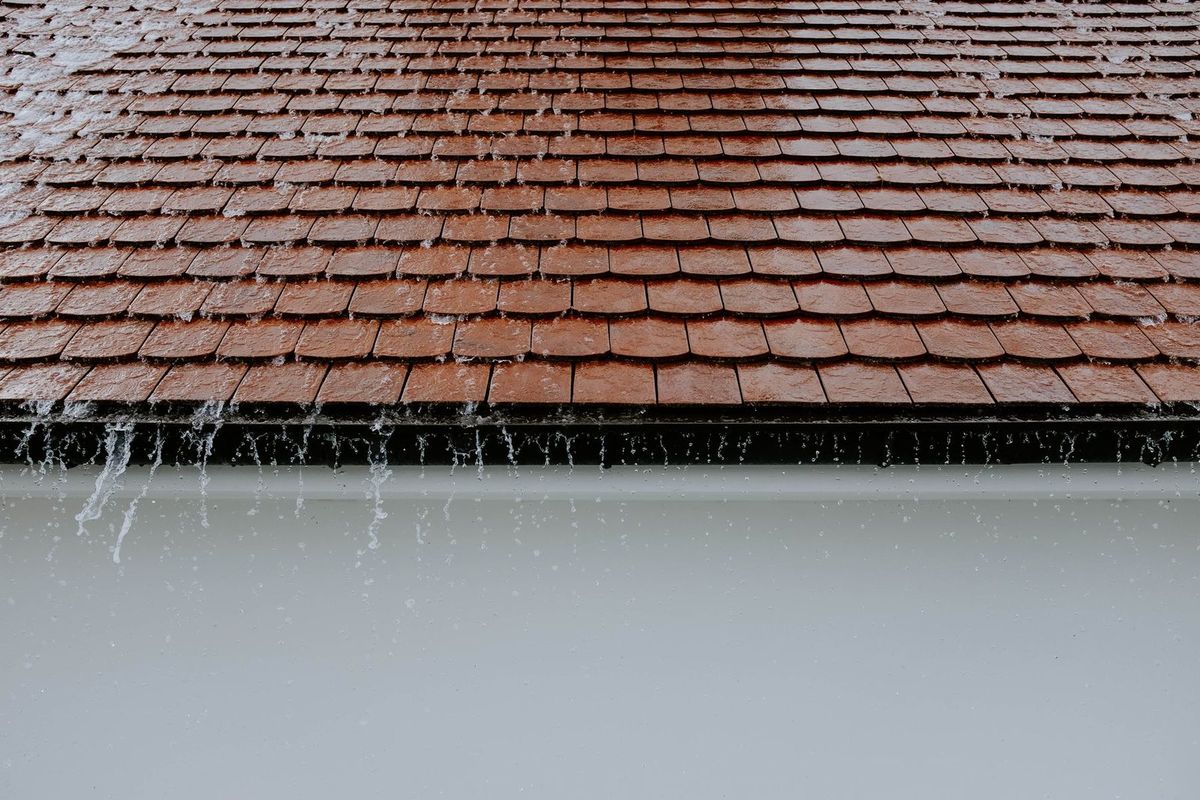
Puget Sound weather does not usually arrive as a single violent storm. It arrives as atmospheric rivers: days of sustained rain, often with wind, that find every weak point in a roof. Add the November and December wind storms that bring down branches across King, Snohomish and Pierce counties, and the winter season produces a steady stream of leaks, failed flashing and trees through roofs.
The two parts of a storm claim
A storm loss has an outside part and an inside part, and they are handled by different trades. The roof repair is a roofing contractor's work. Everything the water did inside, saturated attic insulation, stained and sagging ceilings, wet walls and floors, is the restoration crew's work, and it is the part that grows every hour it is left alone.
The crew's first visit covers both: an emergency tarp or board-up to stop the intrusion, photographs of the roof damage from a safe vantage point, and then the interior inspection, extraction and drying.
Where storm water goes
Water that gets past the roofing runs down the underside of the deck, soaks the attic insulation, and pools on the back of the ceiling drywall until it finds a light fixture, a seam or the lowest point. Blown-in insulation can hold gallons before the ceiling shows a stain. By the time you see the spot, the attic above it has been wet for a while.
The crew meters the ceiling, checks the attic, removes saturated insulation, and dries the ceiling drywall from below with air movers and, where needed, from above once the insulation is out. Drywall that has sagged or that was wet long enough to lose strength is removed and documented.
Flat roofs, skylights, chimneys and additions
The leak points are predictable. Skylights in 1970s and 1980s Eastside homes leak at the curb flashing. Chimneys on mid-century Seattle and Tacoma houses leak at the counterflashing and the cricket. Low-slope sections over additions and porches pond water and leak at seams. Townhouse and condo roofs leak at parapets and scuppers. Knowing where to look speeds the inspection and makes the documentation precise.
Insurance and storm damage
The question adjusters ask is whether the water came in because of a sudden event or because of wear. Wind that lifts shingles, a branch that punctures the deck, or hail that cracks a skylight is sudden and typically covered, including the interior damage. A roof at the end of its life that finally lets water through is usually maintenance. The crew documents what they find without spin: the condition of the roofing, the point of entry, and the interior damage, each photographed and measured. On covered claims the restoration contractor bills the insurer directly for the mitigation and interior work.
Before the next storm
Clean the gutters and check that downspouts discharge away from the foundation. Trim branches that overhang the roof. Look at the attic with a flashlight after the first big rain of the season; a stain on the underside of the deck is the cheapest leak you will ever find. Make sure bathroom fans vent outside, not into the attic, or you will have a moisture problem that looks like a leak.